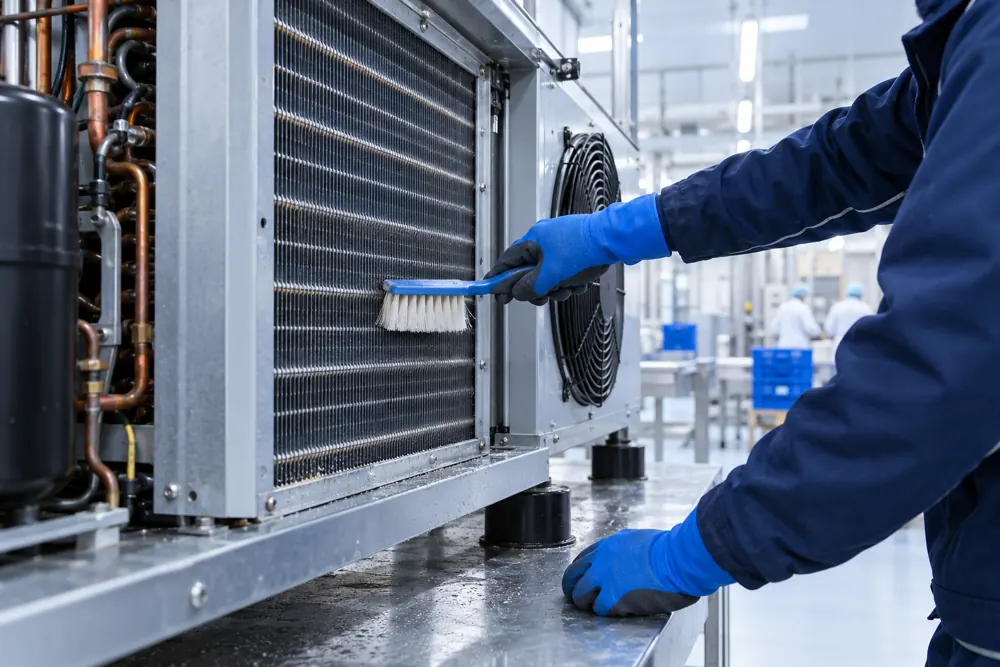
Maintenance With A Defined Scope
A maintenance visit should have a purpose beyond recording that an engineer attended. A useful service checks condition, identifies wear and records issues that need a repair decision. The scope depends on the appliance, manufacturer instructions and how the premises uses the equipment.
A busy kitchen can expose a condenser to grease and heat, while a stockroom cabinet may experience dust and obstructed ventilation. Loading patterns, frequent door openings and cleaning routines all influence performance. We ask about these conditions before discussing a maintenance arrangement.
What Can Be Included
A planned visit can include accessible condenser cleaning, evaporator and fan inspection, door gasket checks, drain checks and a review of controller operation. The engineer should consider the condition of electrical components and connections using safe isolation procedures where required. Not every visit needs the refrigerant circuit opened.
Temperature observations should be considered alongside setpoints, defrost settings and the way the unit is loaded. A display reading alone is not a full performance assessment. Where a fault is found, separate the routine service tasks from a repair requiring parts, further testing or an additional quotation.
Planning The Service Sequence
Start with an asset list covering equipment location, make, model and refrigerant where known. Add existing service records and any recurring alarms. For premises with several departments, identify who can authorise work and who controls access to plant areas.
Next, agree which equipment is covered and what the visit includes. Confirm whether stock needs moving, whether cleaning must happen beforehand and which operating periods are unsuitable. Access to roof-mounted or remote equipment may require arrangements beyond a normal cabinet service.
After the visit, retain the findings against the relevant asset. A clear report should distinguish completed work, recommended repairs and urgent restrictions on use. Ask for the next review date to be based on equipment condition and manufacturer guidance rather than a blanket interval.
Routine Servicing And F-Gas Duties
Routine refrigeration maintenance and statutory F-gas leak checks are related but different activities. A service visit does not automatically satisfy every legal requirement. The installed refrigerant, quantity and system details determine whether specific leak checking obligations apply.
Businesses responsible for relevant equipment should use the government leak checking guidance to establish their duties. Keep the maintenance schedule and any required leak-check schedule visible in your asset records. Refrigerant handling needs appropriately qualified personnel.
What Affects Maintenance Cost
The number of units is only one part of a maintenance quote. Cabinet access, condenser condition, time needed to remove and replace safe covers, plant location and reporting requirements can change the work involved. Equipment scattered across several floors may need more time than a single accessible plant area.
Ask whether the price includes consumables, cleaning tasks, leak checks where relevant and written findings. Repairs, replacement parts and return visits should be clearly described. A quotation should also explain how additional work is approved and how exclusions will be reported.
What Your Staff Can Monitor
Daily operating checks remain important between engineering visits. Staff can record temperatures under the food safety plan, report unusual noise, keep ventilation openings clear and flag worn seals. Follow the manufacturer instructions for cleaning and do not use sharp tools to remove ice.
A maintenance log becomes more useful when staff record when a problem occurs. Note whether it follows deliveries, peak kitchen periods or defrost. Share those observations before the next visit so the engineer can investigate the conditions in which the symptom actually appears.
We support maintenance enquiries for commercial premises across Newcastle and the surrounding Tyne corridor. Tell us whether you need a one-off condition assessment or want to discuss a recurring programme, and list any equipment already showing symptoms.
Practical Answers
Refrigeration Maintenance Questions
How Often Should Commercial Refrigeration Be Serviced?
Commercial refrigeration servicing frequency depends on the equipment instructions, environment and use. A kitchen with heavy grease exposure may need a different schedule from a lightly used storage room. Review condition and fault history with the engineer. Keep any required F-gas leak checks on their own appropriate timetable rather than assuming a service interval covers them.
Does Maintenance Include Replacement Parts?
For Newcastle kitchens and cold stores, replacement parts may fall outside the maintenance agreement. The agreed scope should state which consumables and tasks are covered, and how faults discovered during a visit will be handled. Ask for repair approval before parts are ordered. Retain the service findings so that outstanding recommendations can be reviewed and assigned to the correct equipment.