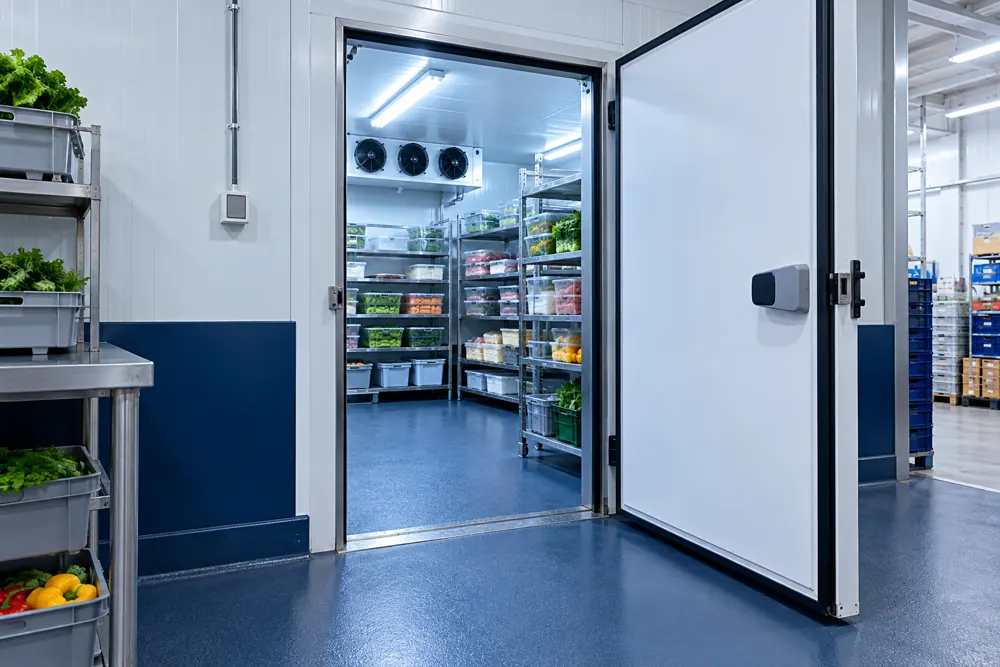
Look At The Complete Room
Cold room problems can involve the refrigeration plant, insulated enclosure or controls. A damaged door closer can increase moisture entry, while an evaporator fault can interrupt airflow. Ice, condensation and temperature drift should be investigated together rather than treated as unrelated symptoms.
A room used for frequent picking behaves differently from a bulk store with limited access. Tell us what is stored, how often the door opens and when the symptoms began. Include details of recent stock changes, defrost events and any work on the building or plant.
When To Request A Repair
Persistent alarms, unusual fan noise, water on the floor and slow temperature recovery need attention. Ice near the threshold may indicate air leakage or moisture problems. A door that no longer seals properly can add load to the plant even when its control settings are unchanged.
If the room is outside the conditions required by your food safety procedures, take action to protect the goods. Manage access, record temperatures and use verified alternative storage when appropriate. A technician cannot decide whether affected stock is suitable simply by restoring the air temperature.
Information That Helps Diagnosis
Send the site postcode, room type, controller details and refrigeration plant information. Photos of the evaporator, door, plant rating plate and visible ice can help. Describe whether other rooms use the same condensing plant and whether their performance has also changed.
Access can affect the work as much as the fault itself. Say whether plant is on a roof, inside a locked compound or above a busy production area. Agree isolation, permits and stock movement before attendance, particularly where the room cannot be emptied during ordinary trading hours.
How The Repair Is Carried Out
Assessment starts with safe access and a review of alarms and operating conditions. The engineer can then inspect enclosure condition, door operation, airflow, defrost controls, drainage and the refrigeration system as relevant. The findings guide the repair instead of starting with an assumed refrigerant shortage.
The proposed work may involve a control adjustment, a failed component, a door repair or further investigation of the circuit. Confirm approval before additional work proceeds. Where moisture has accumulated as ice, allow for safe management of the ice and any underlying drainage problem.
The room should then be observed through suitable operation, with its limitations recorded at handover. A large store may take time to stabilise after disruption. Discuss follow-up and monitoring, and do not treat an initial controller reading as a complete demonstration of product recovery.
Refrigeration Duties And Safe Access
Cold room refrigerant work requires competence appropriate to the installed refrigerant. Personnel undertaking regulated F-gas activities must hold the relevant qualifications. The business responsible for the equipment should also check whether statutory leak inspections and records apply to its particular system.
The government leak checking guidance explains the factors used to determine obligations. Keep room access and escape arrangements clear during repair activity. Agree how a person working inside the room can communicate with staff outside and how normal operations will be controlled.
Cost, Continuity And Follow-Up
Cold room repair costs vary with plant access, fault complexity, parts and the work needed to recover normal operation. Door hardware and refrigeration repairs involve different tasks. A remote plant or shared system can need additional testing to establish the extent of the problem.
Tell us if you need a staged repair, temporary storage or work coordinated with a production shutdown. Cold room hire can be considered separately where availability and site conditions allow. Confirm capacity and power before relying on a temporary unit as the business continuity plan.
After repair, use the report to decide whether the maintenance schedule or operating routine should change. Repeated icing, overloaded shelves and door damage need practical follow-up. Our maintenance service page explains how planned inspections can address condition across the whole equipment list.
Practical Answers
Cold Room Repair Questions
Why Is There Ice Around My Cold Room Door?
Ice around a cold room door can indicate warm, moist air entering through a poor seal or prolonged opening. Door heating, closing mechanisms and room pressure can also need assessment, depending on the design. Keep the area safe and do not chip ice from components. Ask for the underlying cause to be checked before replacing seals alone.
Can A Cold Room Stay In Use During Repairs?
Cold room use during repairs depends on the fault, work area and ability to maintain suitable storage conditions. Some tasks need isolation or stock removal. Agree the arrangement with the engineer and the person responsible for food safety before work starts. Where continued operation is unsuitable, verified alternative storage needs to be arranged separately.