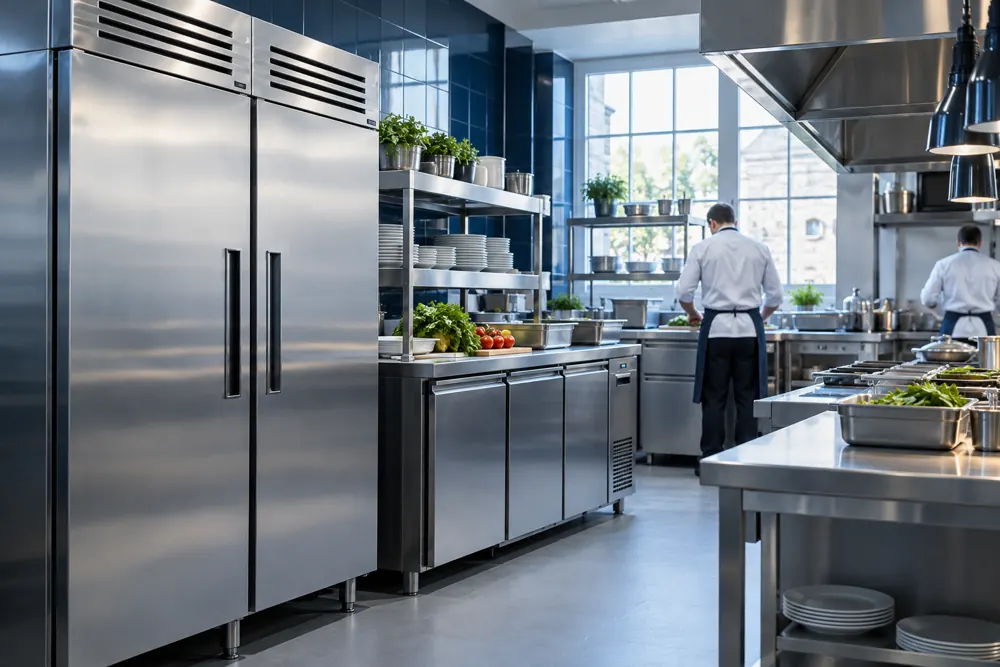
Cabinets, Counters And Displays
Commercial fridges work in very different environments. An upright storage cabinet holds stock behind an insulated door, a prep counter is opened throughout service and a display cabinet must balance presentation with product protection. The correct diagnosis takes the equipment design and actual use into account.
We handle enquiries for these business refrigeration formats. Tell us if the appliance is self-contained or connected to remote refrigeration plant. Share the make, model, refrigerant label and any controller fault code so the likely scope can be considered before a visit is arranged.
Common Signs Worth Investigating
Warm shelves, a compressor that runs for long periods, water beneath a cabinet and thick evaporator ice all deserve attention. A damaged gasket can allow warm air into the cabinet. A blocked drain can cause water problems even when cooling appears normal.
The working environment matters too. A unit installed close to cooking equipment may be exposed to conditions beyond its intended operating range. Boxes placed against ventilation grilles can affect heat rejection. Describe recent layout changes, deliveries or cleaning work when explaining the fault.
Protect Stock Before Troubleshooting
Use your business food safety procedures when a fridge stops maintaining suitable conditions. Restrict unnecessary opening, take appropriate temperature readings and decide whether goods need moving to verified storage. Keep a record of the event and the decisions made by the responsible person.
Do not turn the thermostat progressively colder in an attempt to force a faulty unit to recover. Avoid removing panels, interfering with wiring or breaking ice away from an evaporator. Those actions can damage the equipment and make the eventual repair more involved.
The Repair Process
The enquiry starts with the cabinet identity, postcode and symptoms. We ask about access, service hours and whether the unit is fixed into a counter or fitted beneath other equipment. Mention restrictions on moving appliances and any permit requirements at the premises.
Diagnosis then considers electrical supply, controller inputs, door condition, fans, drainage and refrigeration performance as appropriate. A repair recommendation should describe the cause and any parts needed. If a replacement component has to be ordered, confirm the likely next steps before approving it.
After repair, the fridge needs to be checked for stable operation. Airflow paths and normal loading should be restored before the appliance returns to use. The engineer can report equipment performance, while the business remains responsible for decisions about food that experienced a temperature excursion.
Safety And Food Hygiene
Refrigerant work is not a general appliance adjustment. F-gas activities require the correct individual qualifications, while other refrigerants have their own handling risks. Confirm the refrigerant and contractor competence before work begins, using the government F-gas guidance where applicable.
Food businesses also need suitable hygiene controls around repairs. Agree how tools, removed covers and cleaning will be managed in preparation areas. Food and clean utensils should be protected from maintenance activity, and the appliance should be cleaned appropriately before food is returned.
Repair Or Replace The Cabinet?
The decision depends on the cabinet condition, the fault, parts support and suitability for its workload. A sound cabinet with a failed controller is a different proposition from damaged insulation, corroded structure or repeated major failures. Ask for the reasoning behind a recommendation rather than judging by age alone.
A quote can change with accessibility, model-specific parts, refrigerant handling and the amount of testing needed. Explain whether you require purchase order approval, a written estimate or attendance within a particular access window. No repair price can be reliable without a reasonable understanding of the fault.
For several failing cabinets, mention whether they share the same space, supply or operating pattern. A common environmental problem can affect more than one unit. If ongoing condition is the concern, our maintenance page explains how an asset-based service plan can help.
Practical Answers
Commercial Fridge Repair Questions
Can A Prep Counter Be Repaired On Site?
A prep counter repair can often be assessed at the premises, depending on access and the fault. Fitted counters, restricted ventilation and equipment above the unit may affect the work. Send model details and describe how it is installed. Attendance, parts availability and the repair scope need confirmation before any completion expectation is agreed.
Why Does My Commercial Fridge Keep Icing Up?
Commercial fridge icing can result from door leakage, restricted airflow, defrost problems or a refrigeration fault. Loading and frequent opening can also contribute. Avoid removing ice with tools or assuming a manual defrost solves the cause. Record where the ice forms and whether the problem returns after the manufacturer-approved defrost procedure.